


PQQ (Pyrroloquinoline quinone) is a powerful redox cofactor that has gained significant attention in recent years for its potential role in promoting cellular health and slowing down the processes that affect aging. Scientifically known as Pyrroloquinoline quinone disodium salt, PQQ is a vitamin-like compound naturally found in small amounts in foods such as kiwi, green peppers, parsley, and fermented soy products.
Unlike traditional antioxidants, PQQ is unique because it not only neutralizes free radicals but also supports the creation of new mitochondria in cells—a process known as mitochondrial biogenesis. This makes PQQ especially promising in the context of longevity research and the potential value in the treatment of chronic diseases.
Below is a quick overview of PQQ characteristics:
| Feature | Description |
|---|---|
| Chemical Name | Pyrroloquinoline quinone disodium salt |
| Function | Redox cofactor, antioxidant |
| Key Benefit | Supports mitochondrial health |
| Natural Sources | Kiwi, tofu, green tea |
| Research Focus | Longevity, brain and skin, metabolic health |
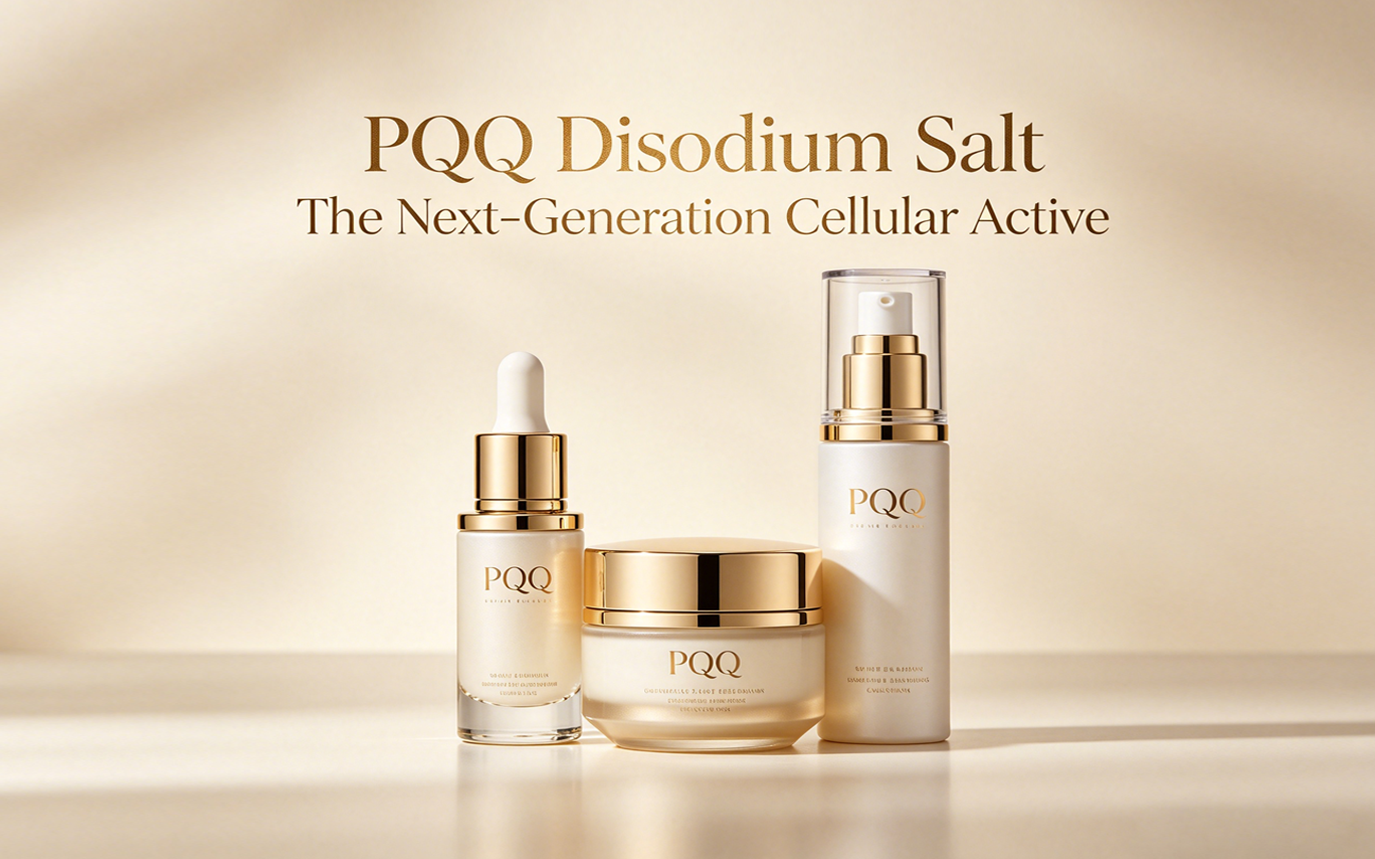
As modern science continues to explore compounds that can affect aging, PQQ has emerged as a strong candidate due to its multifaceted biological roles
.
Mitochondria are often referred to as the "powerhouses" of the cell. They generate ATP, the energy currency required for nearly all cellular processes. However, mitochondrial dysfunction is one of the primary factors that affect aging.
PQQ plays a crucial role in:
Stimulating mitochondrial biogenesis
Enhancing energy production
Protecting mitochondria from oxidative damage
Increases mitochondrial number: Studies show that PQQ activates signaling pathways (like PGC-1α) that promote new mitochondria formation.
Improves efficiency: Existing mitochondria function more effectively under the influence of PQQ.
Reduces oxidative stress: As a potent antioxidant, PQQ neutralizes reactive oxygen species (ROS).
| Mechanism | Impact |
|---|---|
| Mitochondrial biogenesis | More cellular energy |
| Antioxidant action | Less cellular damage |
| Cellular signaling | Enhanced longevity pathways |
Because mitochondrial decline is a hallmark of aging, PQQ’s ability to directly support these organelles makes it highly relevant in anti-aging discussions.
The question “Is PQQ anti-aging?” largely centers on its role in promoting longevity. While no compound can stop aging entirely, PQQ may significantly slow down processes that affect aging.
Activation of cellular repair mechanisms
Reduction of chronic inflammation
Enhancement of metabolic efficiency
Research suggests that PQQ has potential value in the treatment of chronic diseases, including:
Cardiovascular disease
Neurodegenerative disorders
Diabetes
These diseases are strongly linked to aging, so addressing them contributes to overall longevity.
Extends cellular lifespan
Protects DNA integrity
Reduces age-related oxidative damage
| Longevity Factor | Role of PQQ |
|---|---|
| Cellular repair | Enhanced |
| Oxidative stress | Reduced |
| Inflammation | Lowered |
In summary, PQQ does not merely mask aging symptoms—it addresses the root biological mechanisms that affect aging.
One of the most exciting areas of PQQ research involves its effects on the nervous system, particularly the brain and skin connection in aging.
PQQ supports cognitive function and neurological health through:
Neuroprotection
Improved synaptic plasticity
Reduction of neuroinflammation
Enhances memory and learning
Protects neurons from degeneration
Supports nerve growth factor (NGF) production
Aging often leads to:
Cognitive decline
Increased risk of Alzheimer’s and Parkinson’s disease
PQQ may counteract these by:
Reducing protein misfolding
Preventing mitochondrial dysfunction in neurons
PQQ crosses the blood-brain barrier, directly impacting brain cells
It works synergistically with CoQ10 for enhanced effects
Regular supplementation may improve mental clarity
Scientific evidence increasingly supports that PQQ Promotes Health and Longevity by protecting both the brain and peripheral nervous system. Its antioxidant and mitochondrial-supporting properties make it a standout compound in anti-aging research.
Eye health is another critical aspect of aging, as vision tends to decline over time. PQQ contributes to maintaining healthy vision by protecting retinal cells from oxidative stress.
Protects against age-related macular degeneration (AMD)
Reduces oxidative damage in eye tissues
Supports mitochondrial function in retinal cells
| Eye Condition | Role of PQQ |
|---|---|
| Macular degeneration | Protective |
| Cataracts | Potential prevention |
| Retinal damage | Reduced |
Because oxidative stress is a major factor that affect aging in the eyes, PQQ’s antioxidant capacity is particularly valuable.
Metabolic dysfunction is a major contributor to aging and chronic disease. PQQ plays a role in preserving metabolic balance.
Improves insulin sensitivity
Enhances fat metabolism
Reduces inflammation
The potential value in the treatment of chronic diseases becomes evident in metabolic conditions such as:
Obesity
Type 2 diabetes
Metabolic syndrome
| Metabolic Marker | Effect of PQQ |
|---|---|
| Blood glucose | Stabilized |
| Insulin sensitivity | Improved |
| Lipid profile | Optimized |
By addressing metabolic dysfunction, PQQ helps reduce factors that affect aging at a systemic level.
The liver and kidneys are vital detoxification organs, and their decline significantly contributes to aging.
Reduces oxidative stress in liver cells
Enhances detoxification pathways
Protects kidney function
Prevents fatty liver disease
Reduces inflammation
Supports regeneration
Reduces toxin accumulation
Improves filtration efficiency
| Organ | Benefit of PQQ |
|---|---|
| Liver | Detox support |
| Kidney | Function preservation |
Since organ decline is a major factor that affect aging, PQQ’s protective effects are highly valuable.
Aging often leads to muscle loss (sarcopenia) and bone density reduction. PQQ supports musculoskeletal health by enhancing cellular energy and reducing inflammation.
Improves muscle endurance
Supports bone density
Reduces inflammation in joints
Increased mitochondrial function in muscle cells
Reduced oxidative damage
Enhanced protein synthesis
| Musculoskeletal Aspect | Role of PQQ |
|---|---|
| Muscle strength | Improved |
| Bone density | Maintained |
| Joint health | Protected |
By maintaining physical function, PQQ helps mitigate key factors that affect aging.
So, is PQQ anti-aging? The evidence suggests that PQQ is not a miracle cure, but it is a highly promising compound that addresses multiple biological pathways involved in aging.
PQQ (specifically Pyrroloquinoline quinone disodium salt) supports mitochondrial health
It reduces oxidative stress and inflammation
It shows potential value in the treatment of chronic diseases
It protects the brain and skin, as well as other organs
It helps slow processes that affect aging
Cellular energy enhancement
Longevity support
Cognitive protection
Metabolic balance
In a world increasingly focused on longevity and wellness, PQQ stands out as a scientifically supported option for those looking to maintain health as they age.
PQQ is used to support mitochondrial function, improve energy levels, and reduce oxidative stress. It is also studied for its potential value in the treatment of chronic diseases.
Most studies suggest that PQQ is safe when taken in recommended doses. However, consulting a healthcare provider is always advised.
PQQ helps slow processes that affect aging by improving mitochondrial health, reducing inflammation, and protecting cells from damage.
Yes, PQQ supports the brain and skin by enhancing cognitive function, protecting neurons, and reducing neuroinflammation.
Unlike typical antioxidants, PQQ not only neutralizes free radicals but also promotes the formation of new mitochondria, making it uniquely effective in addressing factors that affect aging.
Yes, PQQ is naturally present in foods like kiwi, green tea, and fermented soy, though typically in small amounts.
While more research is needed, current evidence strongly suggests that PQQ Promotes Health and Longevity by targeting core aging mechanisms.


